
The short answer. A healthy adult bladder usually holds 300 to 500 milliliters before the urge to pee gets hard to defer. That average tells you almost nothing about your bladder. The number that matters is yours. You can find it in three days with a measuring cup and a notebook.
Priya, 38, has been telling people she has a small bladder since college. Six trips to the bathroom on a normal work morning. A 2 p.m. coffee that has her up twice during the night. Mostly she has just lived with it, because her mother had a small bladder too, and her sister, and everyone in the family seemed to.
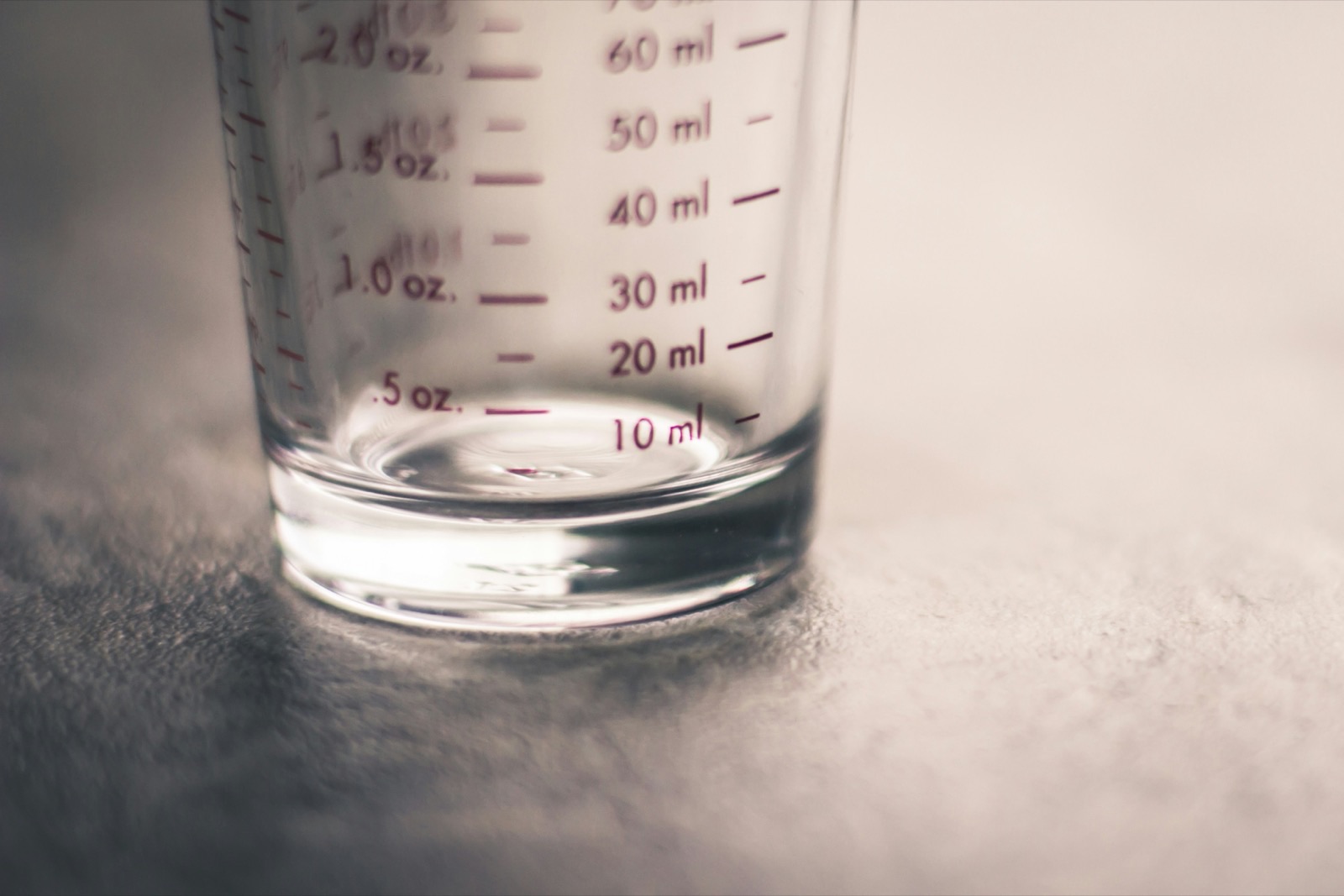
Then she got curious. She bought a cheap measuring cup at the grocery store. Her first void of the day measured 410 milliliters. That afternoon, the urgent dash to the bathroom after her second coffee measured 130. Why did those two numbers belong to the same bladder? Most articles will give her an average. The interesting question, the one Priya was finally asking, was what is mine, and why does it change?
Key takeaways
- Adult bladders typically hold 300 to 500 milliliters before urgency. Textbook ranges disagree because they measure different things.
- Anatomical capacity is how much the bladder can stretch. Functional capacity is how much it holds in everyday life. The two can differ by a factor of two.
- The useful number is your own functional capacity. A three-day bladder diary reveals it.
- Most people who say they have a small bladder do not. The bladder is signaling urgency early because of sensitivity, irritants, pelvic floor coordination, or habit.
- Gentle retraining can expand functional capacity in weeks to months, at any age.
Why the textbook numbers disagree
Search "bladder capacity" and Google hands you four answers. One source says 250 to 350 ml. Another says 300 to 500. A third says 300 to 600. A fourth says 400 to 450. They cannot all be right. As it turns out, all of them are. The disagreement is the gap between two things both called "capacity" that mean different things.
The first is how much your bladder can physically stretch. Picture a balloon. A new latex balloon can stretch to alarming sizes if you keep blowing into it. Your bladder works the same way. Under unusual conditions, an adult bladder can stretch toward 800 to 1,500 milliliters, and substantially more in some pathological cases (Purohit et al, Journal of Urology 2008). That is anatomical capacity, the ceiling of the organ.
The second is how much your bladder actually holds in everyday life, when you respond to the urge by walking to the bathroom. That number sits much lower. Consensus reviews of healthy adults put the range at roughly 300 to 400 milliliters, with some sources extending the upper end to 500 (Lukacz et al, International Journal of Clinical Practice 2011). That is functional capacity. It is the number you live inside.
Think of the balloon for a party. The maximum size you could blow it to before it pops is interesting trivia. The size you would comfortably fill it for the cake table is what matters. Your bladder is the same. The pop point rarely matters outside of an emergency. The everyday size matters every day.
Functional capacity also moves more than the textbook suggests. It shifts across a day depending on hydration. It shifts across seasons. It shifts across decades as muscle tone, nerve responsiveness, and pelvic floor strength change. It can also be retrained.
How to find your own bladder capacity in three days
This is the part nobody on the first page of Google walks you through. The population average is a useful benchmark. It is not your number.
The tool is a bladder diary. The technical-sounding phrase undersells what it is: a notebook, a measuring cup, and three days of honest measurement. You can buy a urine collection hat for a few dollars, or use any clean container you can pour from.
The mechanics:
- Measure every void for three days. Day and night. Record time, volume in milliliters, urgency on a 0 to 10 scale, and any leaks.
- Track what you drink and when. Type of fluid, volume if you can, time of day. Coffee, tea, alcohol, water, soda.
- Do not change your habits. Measure your actual bladder, not a polished version.
- At the end of three days, find your numbers. Total daily output for each 24 hours. The largest single void in each 24 hours, called your maximum voided volume, or MVV. The average size of your voids.
The most useful number is the MVV. It is the closest answer to "what is my bladder capacity?" It is what your bladder, under normal control, is willing to hold before insisting you find a bathroom. Researchers have used the largest 24-hour voided volume from a bladder diary as a working measure of functional bladder capacity for decades (Amundsen et al, Neurourology and Urodynamics 2007).
A note on hydration. If you barely drink during the three days, every void will be small, and the MVV will not tell you anything. Drink to thirst plus a bit more, about 1.5 to 2 liters a day, and let the diary tell its story. Expect some voids to arrive quickly after a drink, because that timing is normal.
What your number actually means
Once you have your MVV, the picture gets much clearer than the textbook average ever was.
MVV at or above 350 ml, with average voids around 200 to 300: healthy functional capacity. Your bladder is holding what it should. Bathroom trips are likely six to eight a day, with no more than one overnight if you are under 60.
MVV between 200 and 350, with average voids around 150: functional capacity is on the lower end. Worth tracking. This is the zone where retraining tends to help, and where everyday irritants are most likely to be quietly shrinking your number.
MVV consistently below 200, with average voids around 100 to 150: functional capacity is markedly reduced. The bladder is almost never anatomically small. It is signaling urgency far below its physical ceiling. The bladder is fine. The signaling is the story.
The 350 milliliter mark sits in the middle of the consensus normal range (Lukacz et al, 2011). If your MVV crosses 350 reliably across multiple days, your storage system is doing its job.
Priya's morning 410 ml puts her firmly in the healthy range. Her 130 ml after coffee tells the rest of the story: a bladder that holds plenty when nothing is irritating it, and one that signals urgency early when caffeine arrives. Same bladder. Two different days. Two different numbers.
Why your bladder might feel smaller than it is
If you came here because your bladder feels small, your MVV will probably surprise you. The vast majority of people who say they have a small bladder turn out to have an anatomically normal one. The bladder is reporting urgency at volumes well below its ceiling.
You sit down at your desk after coffee. Twenty minutes later, the urge arrives. That same morning, you may have held 400 ml between waking and the first coffee with no problem at all. The bladder did not shrink in those twenty minutes. Something else shifted. Five common reasons:
The bladder has become more sensitive. The detrusor, the smooth muscle in the bladder wall, can develop an overactive habit. It fires the "I am full" signal earlier than it should, sometimes at 150 milliliters when 350 would be normal. This is overactive bladder, and the trigger is rarely one thing. It can come from the bladder muscle, the nerves around it, or the lining of the bladder itself (Peyronnet et al, European Urology 2019).
Your pelvic floor is not relaxing cleanly. The pelvic floor is the layer of muscles that hold the bladder, uterus, and bowel and help control the urinary sphincter. When those muscles stay chronically tense, the bladder cannot trust they will hold, so it signals urgency early. People with non-relaxing pelvic floor dysfunction often feel like they did not fully empty (Faubion et al, Mayo Clinic Proceedings 2012).
You are drinking the wrong things. Caffeine, alcohol, carbonated drinks, citrus juices, and the artificial sweetener aspartame all irritate the bladder lining. They shorten the time between sipping and signaling. A morning bladder that holds 400 ml until 9 a.m. can be the same bladder that holds 150 ml at 11 a.m. after two coffees. For a deeper look, see foods that irritate the bladder.
You have trained your bladder to expect small volumes. The just-in-case habit, peeing before you leave the house or before a meeting even without an urge, teaches the bladder to expect emptying at low volumes. Over time, the bladder signals urgency at the volumes you have trained it to expect. The same mechanism, run the other way, retrains it back.
You are under chronic stress. The bladder is wired into the nervous system in ways easy to underestimate. Sustained fight-or-flight tension makes the bladder more sensitive and the pelvic floor more guarded. People notice it during a big work week, a new baby, a move (Smith et al, Neurourology and Urodynamics 2024).
Two people with the same physical bladder can have completely different experiences depending on which of these is in play.
Key insight. Capacity and control are not the same thing. The bladder stores. The pelvic floor and the nervous system govern release.
Gently expanding what you can hold
If your functional capacity is lower than you would like, the path to a bigger number is rarely surgery and rarely medication. It is retraining. The bladder is a muscular organ wired into a behavioral system, and behavioral systems respond to consistent, gentle inputs over time (Funada et al, Cochrane Database of Systematic Reviews 2023).
The basic idea is to defer the first urge a little. Not an hour. Not until you are in pain. Just a few minutes longer. When the urge arrives, sit down, breathe slowly, and try one of these:
- Squeeze the pelvic floor (the muscles you would use to stop urine mid-stream) for ten seconds. The squeeze sends a reflex signal that calms the bladder.
- Cross your legs and lean forward slightly.
- Distract yourself. Read something. Reply to a text. The urgency wave often passes in 30 to 90 seconds.
- Then, after the wave passes, walk calmly to the bathroom.
Over weeks, the deferrable interval grows. The first-urge signal arrives at larger volumes. Most people see meaningful change in four to six weeks. Some take longer. The retraining rewards patience. For specific techniques, see urge suppression techniques. For an overview of the full bladder-retraining approach, see the bladder training exercises pillar.
One practical note. Do not reduce fluid intake to manage symptoms. I know, drinking more to pee less sounds backwards. Stay with it. Concentrated urine is more irritating, which makes the bladder signal urgency more often, not less.
When low capacity is signaling something else
Most of the time, a lower-than-expected MVV is a signaling problem with a behavioral fix. Sometimes it is signaling something more specific.
Pain during filling, especially a burning or deep pelvic ache that worsens as the bladder fills and eases as it empties, can point toward interstitial cystitis, also called bladder pain syndrome. Functional capacity in interstitial cystitis is genuinely reduced, and the degree of reduction tracks symptom severity (Walker et al, Journal of Urology 2017).
A low MVV combined with a sense of incomplete emptying, the feeling that something is still in there after you have just been, can point toward retained urine, called post-void residual. This is more common in men with an enlarged prostate, where retained urine signals that the outlet is partly blocked (Theissen et al, World Journal of Urology 2023). It also shows up in nerve-related conditions like diabetes. Retained urine reduces effective capacity from below.
A sudden change in functional capacity, over weeks or months, deserves attention. A bladder that was holding 400 ml last year and is suddenly holding 200 is telling you something has shifted. The cause could be a new medication, a hormonal change, or a new pelvic floor pattern after surgery or pregnancy. A new neurological symptom is also worth a look.
A pelvic-floor physical therapist who works in the IPC 4Is framework (Fluid Imbalance, Storage Impairment, Voiding Impairment, Incontinence) is usually the most useful first stop. Pelvic-floor therapists have direct access in most regions and they read bladder diaries fluently. Together you can decide whether your pattern is a storage problem that retraining will fix, a voiding problem that warrants imaging, or something more layered that needs a urologist or another specialist.
For related reads, see a weak urine stream for the voiding side of the same story, and waking up to pee at night for what bladder capacity has to do with nighttime trips.
Frequently asked questions
What is the normal bladder capacity for age?
For adults, the typical range is 300 to 500 milliliters before the urge gets hard to defer. For children, the formula (age in years + 2) × 30 gives a working estimate in milliliters, so a 6-year-old's bladder holds about 240 ml (Berger et al, Journal of Urology 1983). Age-related decline in adults is real but smaller than most people expect. Most of what we call bladder problems with age turns out to be sensitivity, not the bladder getting smaller.
What is the maximum amount of pee a bladder can hold?
The anatomical maximum, the volume the bladder can stretch to under unusual conditions, sits somewhere around 800 to 1,500 milliliters, and substantially more in pathological cases. That is a stretch ceiling, not a comfortable holding volume. Most healthy adults are deeply uncomfortable above 500 to 600 ml. Pushing past that regularly is not recommended.
How many ml should you pee each time?
A healthy average is around 200 to 350 milliliters per void, with one or two larger voids per day approaching 350 to 500. Volumes below 150 ml suggest reduced functional capacity, almost always a signaling issue rather than an anatomical one. Volumes above 500 ml across many voids can suggest the bladder is overfilling because it does not signal until late, sometimes a sign of underactive bladder.
What is the 21-second pee rule?
A 2014 study from a Georgia Tech research group looked at mammals from cats to elephants and found that all of them, regardless of body size, take roughly 21 seconds to empty their bladders (Yang et al, PNAS 2014). Larger mammals have proportionally longer urethras, and the gravitational pressure scales to keep the duration consistent. Fun trivia, not a clinical benchmark. If your voiding routinely takes 60 seconds or longer, see a weak urine stream.
Is bladder capacity different for men and women?
Slightly. On average, healthy bladders in men and women both fall in the 300 to 500 ml functional range, with women often reporting first urge at marginally lower volumes. After midlife, prostate changes can affect men's effective capacity, and hormonal shifts plus the long-term effects of childbirth can affect women's. The differences within each group are larger than the differences between them.
Does bladder capacity shrink with age?
A small amount, yes, but less than the popular narrative suggests. Healthy older adults usually keep a functional capacity in the 300 to 450 ml range. The bigger drivers of change after 60 are sensitivity, pelvic floor coordination, and conditions like an enlarged prostate or a weakened detrusor (Lukacz et al, 2011). Retraining works at every age.
Can you measure your bladder capacity at home?
Yes. A measuring cup, a notebook, and three days of consistent measurement will give you a number close enough to what a clinic test would measure for everyday purposes. The largest single void in a 24-hour period is your maximum voided volume. The free diary on myflowcheck.com does the math for you.
The bottom line
Priya finished her three days at an MVV of 410, an average void of 230, and a fluid log that traced a clean line: coffee at 2 p.m., a 130 ml dash by 2:30, two more small voids before dinner. Her bladder was not small. It was answering quickly to one specific input. The story she had been telling herself her whole adult life was true about the bathroom trips and wrong about the cause.
- The textbook average does not apply to your bladder. The number that matters is your own.
- Three days, a measuring cup, and the largest single void in 24 hours is your maximum voided volume. That is your closest answer to "what is my bladder capacity?"
- Most people who say they have a small bladder do not. The bladder is signaling urgency early because of sensitivity, irritants, pelvic floor coordination, or learned habit.
- Capacity and control are not the same thing. The bladder stores. The pelvic floor and the nervous system govern release.
- Retraining works at every age, in weeks to months, without surgery or medication. Bring your three days to a pelvic-floor PT who works in the 4Is framework.
This article is for general education and is not a substitute for medical advice from your healthcare provider. If you are experiencing symptoms that worry you, contact a clinician. Photo: Steve A Johnson on Unsplash.